


2.2 TD4 / SD4 Chip Tuning Stage 1 — JLR EDC17 Calibration
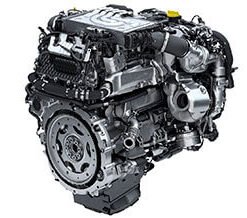
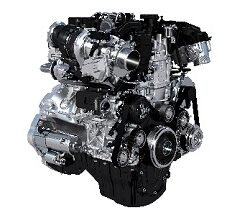
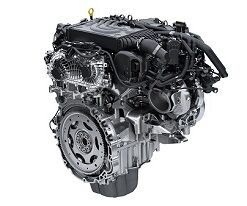
Stage 1 ECU calibration for the JLR 2.2 TD4 and SD4 diesel engine (224DT / DW12). This calibration targets the Bosch EDC17CP42 control unit that JLR fitted across the Freelander 2, Range Rover Evoque, Discovery Sport, and Jaguar XF 2.2d. It rewrites torque limitation, injection duration, rail pressure, and turbocharger boost control to release the mid-range torque the 2.2-litre Duratorq architecture already supports. Owners gain sharper throttle response, stronger overtaking pull, and reduced gear-hunting under load, while the DPF and EGR systems remain fully operational.
Vehicle Fitment and Engine Identification
This calibration covers the 2,179 cc four-cylinder common-rail diesel family that carries the 224DT engine code. JLR marketed the same engine in two factory power levels:
- 2.2 TD4: 150 hp (110 kW) at 4,000 rpm and 420 Nm at 1,750 rpm.
- 2.2 SD4: 190 hp (140 kW) at 3,500 rpm and 420 Nm at 1,750 rpm.
Fitment includes Freelander 2 (L359), Range Rover Evoque (L538), Discovery Sport (L550), and Jaguar XF / XF Sportbrake 2.2d. The calibration reads the ECU hardware identifier before writing, so the file matches the Bosch EDC17CP42 variant fitted to the vehicle rather than a generic map.
Hardware the Calibration Works With
The 224DT relies on a Bosch common-rail injection system with piezo injectors (Bosch 0445116043 / 0986435423), a Mitsubishi TD04L variable-geometry turbocharger (49477-01202 family), and the Bosch EDC17CP42 ECU. These components define the safe tuning envelope. The Stage 1 file increases rail pressure and injection quantity within the flow ceiling of the piezo injectors, raises boost request to the VTG actuator’s mechanical stop margin, and recalibrates the driver-demand and torque-limit maps so the ECU delivers power without triggering protection strategies.
Measured Stage 1 Gains
Dyno-tested calibrations for this engine family produce the following results on standard hardware:
| Factory Variant | Stock Power | Stage 1 Power | Stock Torque | Stage 1 Torque |
|---|---|---|---|---|
| 2.2 TD4 (150 hp) | 150 hp | 189 hp (+39 hp) | 420 Nm | 465–474 Nm (+45 to +54 Nm) |
| 2.2 SD4 (190 hp) | 190 hp | 213–215 hp (+23 to +25 hp) | 420 Nm | 470–474 Nm (+50 to +54 Nm) |
These figures represent measured dyno results from established calibrators working on the EDC17CP42 platform. The TD4 responds with the larger percentage power gain because the factory file leaves more headroom in the boost and fuel maps. The SD4 already runs a higher specific output, so the Stage 1 calibration concentrates on torque delivery and throttle mapping rather than peak power.
What the Calibration Changes Inside the EDC17CP42
The Bosch EDC17CP42 manages torque through layered limiters: driver-demand, smoke limitation, clutch protection, and gearbox torque ceilings. The Stage 1 process recalibrates these layers as a coordinated set. Injection timing advances within the safe window for the combustion chamber geometry (85.0 mm bore × 96.0 mm stroke, 15.8:1 compression ratio). Rail pressure rises in the mid-load region where the piezo injectors retain full authority. The VTG actuator receives a boost request that stays inside the compressor map’s efficiency island. The result is a calibration that produces repeatable power without leaning on the turbocharger outside its design margin.
DPF, EGR, and Oil Dilution Considerations
This Stage 1 calibration keeps the DPF and EGR systems active. It does not disable regeneration or remove emissions hardware. The JLR 2.2 diesel uses a passive-active DPF strategy with post-injection to raise exhaust temperature during active regeneration, and the calibration respects those routines. Because oil dilution on this engine family rises when active regenerations interrupt or repeat, the file preserves the ECU’s dilution model and service-interval calculation. Owners who perform regular 30-minute motorway runs give the DPF the thermal window it needs to complete regeneration, which keeps the oil dilution rate within JLR’s expected range.
Delivery and Transactional Details
You can order this calibration as a bench flash service or, where the ECU supports it, through the OBD port. The process reads the original file, applies the Stage 1 calibration, and returns the ECU with the original file archived for reversal. Each file is VIN-checked and hardware-matched before delivery. Turnaround is typically one to two working days after file receipt. The price covers the calibration file, technical support, and the original-file backup. This product is sold for motorsport and off-road use where permitted by law; road legality remains the customer’s responsibility.




Reviews
There are no reviews yet.