
Parameterization of Ford Adaptive Cruise Control Settings
While our primary engineering focus centers on Jaguar Land Rover architectures, our advanced diagnostic suites extend to cross-platform parameterization for multi-marque fleets and enthusiasts. Optimizing Ford Adaptive Cruise Control settings requires a deep understanding of the module’s configurable variables. Unlike fixed systems, the adaptive cruise module allows for granular calibration of time-gap intervals, deceleration aggressiveness, and instrument cluster telemetry, ensuring the longitudinal control logic aligns perfectly with the driver’s preferences and specific vehicle dynamics.
Time-Gap and Deceleration Profile Calibration
The most critical of the Ford Adaptive Cruise Control settings is the time-gap parameterization. This setting dictates the spatial buffer the system maintains behind a lead vehicle. The target following distance is not static; it is a dynamic variable calculated continuously based on the host vehicle’s speed. The algorithm utilizes the following kinematic relationship:
$$ d_{target} = v_{host} \cdot t_{gap} + d_{offset} $$
Where $v_{host}$ is the current velocity, $t_{gap}$ is the user-selected time interval, and $d_{offset}$ is a static minimum distance buffer. Through advanced diagnostic coding, we can alter the default $t_{gap}$ values, allowing for tighter following distances in heavy traffic or extended gaps for high-speed highway transit, while simultaneously adjusting the deceleration torque request limits to prevent abrupt braking interventions.
Module Coding and Instrument Cluster Integration
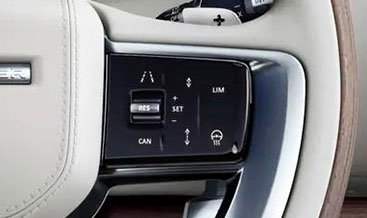
Modifying the Ford Adaptive Cruise Control settings extends beyond the steering wheel toggles. Utilizing advanced diagnostic software, our technicians access the Adaptive Cruise Control Module directly via the OBD-II port. This allows us to enable hidden features such as lane centering integration, adjust the speed limiter override thresholds, and refine the visual and audible warning parameters within the Instrument Panel Cluster. Proper configuration ensures that the human-machine interface accurately reflects the system’s current operational state without causing driver distraction.
Diagnostic Protocols and Firmware Validation
Professional Configuration and Coding Services
Unlock the full potential of your vehicle’s longitudinal assistance systems with professional parameterization. Our Ford Adaptive Cruise Control settings configuration service ensures your system is calibrated for optimal safety, comfort, and responsiveness. The comprehensive coding and calibration service is priced at $250, which includes full module access, custom time-gap mapping, and dynamic road testing. Select your specific vehicle model and year below to verify module compatibility, add the coding service to your cart, and schedule your diagnostic appointment.