



2.0L Ingenium Diesel 150hp / 180hp — Stage 1 Chip-Tuning Calibration
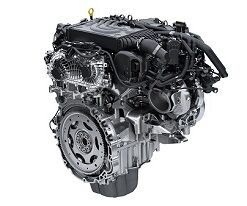
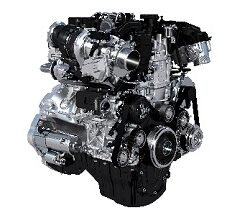
The 2.0-litre Ingenium diesel (AJ200D) is JLR’s modular four-cylinder common-rail platform, and it left the factory in a deliberately tiered calibration strategy. The 150PS variant produces 380Nm. The 180PS variant produces 430Nm. Both run the same aluminium block, the same Bosch common-rail injection hardware, and the same variable-geometry turbocharger architecture. The 250PS D240 derivative proves the hardware’s headroom. The 150PS and 180PS maps simply stop well short of it.
Our Stage 1 calibration works inside the validated envelope of the standard hardware. The 150PS tune gains 44PS and 63Nm on measured dyno protocols. The 180PS tune gains 15–25PS and 50–60Nm depending on ECU variant. Both deliver sharper throttle response, a wider usable torque band, and the mid-range pull that makes the Ingenium feel like the engine JLR engineered rather than the one the emissions strategy restrained.
Why the 150PS and 180PS Maps Leave Torque on the Table
JLR detuned the lower-output Ingenium variants for fleet CO₂ positioning, taxation bands, and driveline life management across a broad model range. The torque-request mapping inside the engine control module carries conservative smoke-limitation ceilings and early torque truncation. The ZF 8HP automatic gearbox has its own torque-limiter tables, and JLR calibrated the lower tunes to stay comfortably beneath those ceilings rather than exploit them.
The D240 calibration demonstrates what the hardware supports. A correct Stage 1 file does not chase D240 numbers blindly — it raises the torque ceiling within the validated thermal and mechanical limits of the specific 150PS or 180PS hardware, and it respects the gearbox torque model rather than ignoring it.
ECU Identification and Calibration Pathway
The Ingenium diesel runs Bosch EDC17CP55 in most applications, with Bosch MEDC17.9 appearing in certain Jaguar XE and later build phases. We identify your ECU hardware before writing any file. The Stage 1 calibration adjusts rail-pressure targets, injection duration and timing, boost-control schedules, and torque-limiter thresholds within the validated operating envelope of the standard turbocharger and injection system.
This is a calibration upgrade, not a hardware swap. The process changes only the software in the engine control module, and the original calibration can be restored at any time.[reference:6] We do not disable torque monitoring, we do not remove the gearbox protection logic, and we do not touch the DPF, EGR, or SCR monitor routines unless you request those services separately.
Measured Stage 1 Outcomes
| Parameter | 150PS Ingenium (Stock) | 150PS Stage 1 | 180PS Ingenium (Stock) | 180PS Stage 1 |
|---|---|---|---|---|
| Maximum Power | 150 PS | 194–205 PS | 180 PS | 195–205 PS |
| Maximum Torque | 380 Nm | 443–480 Nm | 430 Nm | 480–490 Nm |
| Power Gain | — | +44 PS | — | +15–25 PS |
| Torque Gain | — | +63 Nm | — | +50–60 Nm |
The 150PS calibration delivers the larger proportional gain because JLR left more headroom in the lower tune. The 180PS calibration extracts the remaining safe torque without pushing the standard turbocharger beyond its validated compressor map. Both retain the factory torque truncation in first and reverse gears — the transmission protection JLR engineered remains active.
Driveline and Emission Safeguards
We calibrate the Stage 1 file against the specific gearbox and driveline configuration of your vehicle. The ZF 8HP automatic carries its own torque-limiter model, and the engine ECU communicates torque requests to the transmission control module during shifts.[reference:7] The Stage 1 file respects that torque model rather than simply raising the engine-side ceiling. This is the same cooperative strategy JLR uses in the higher-output calibrations of this engine family.
The DPF regeneration strategy, EGR flow monitoring, lambda control, AdBlue/SCR dosing, and all OBD readiness monitors remain fully operational. The calibration keeps the factory emission-control architecture intact, so the vehicle continues to meet its original compliance obligations and passes diagnostic inspection without tuning-related fault codes.
What Changes Behind the Wheel
The most common complaint about the lower-output Ingenium is not outright slowness — it is the narrow torque band and the hesitation below 1,800 rpm. The Stage 1 calibration widens that band substantially. The engine holds peak torque from approximately 1,600 rpm through 2,800 rpm, which transforms overtaking, motorway gradient work, and loaded acceleration. Throttle response becomes linear rather than stepped, and the ZF 8HP downshifts less frequently because the engine pulls a higher gear without complaint. In stop-start traffic and low-speed manoeuvring, the additional low-rpm torque gives the driver finer control with less throttle input.
Ordering and Calibration Support
Select your model, model year, engine output (150PS or 180PS), and ECU type at checkout. Our calibration team cross-checks the order against the vehicle’s ECU identification and hardware specification before releasing the file. You receive the calibration delivery, a vehicle-specific flashing guide, and direct engineering support for the EDC17CP55 and MEDC17.9 platforms.
Release the performance the lower-output Ingenium calibration holds back. Stage 1 chip tuning for the 2.0 diesel — JLR-informed calibration, ZF 8HP torque management retained, emission monitors intact.




Reviews
There are no reviews yet.